Cargo guide · 9 min read
Reefer cargo claims: temperature records and the documents you need
Updated 16 November 2026
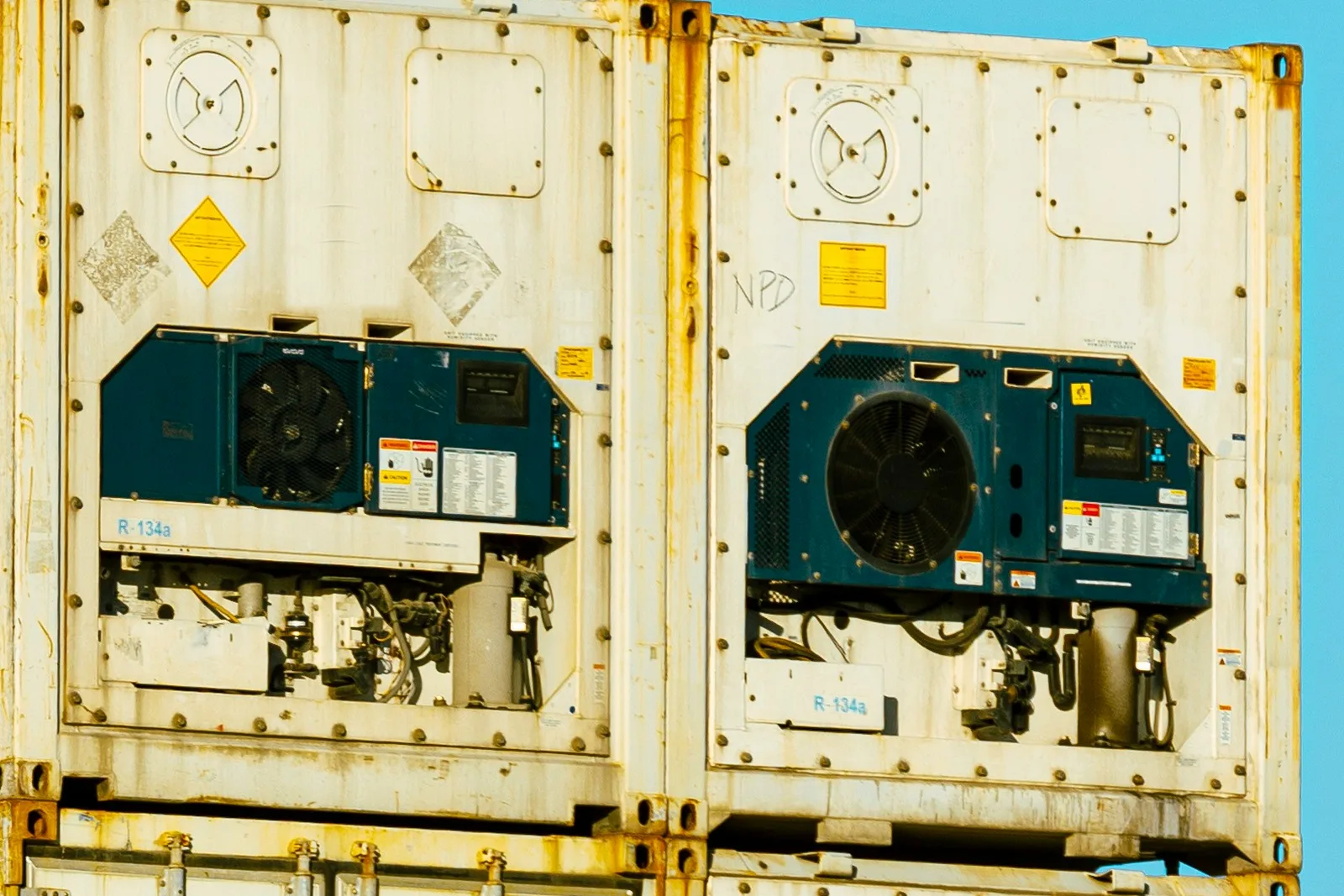
A reefer claim is usually decided by records: the set point that was ordered, the set point that ran, and the temperature the unit logged in between. This guide lists the typical causes of reefer losses, the documents that show each one, who holds them and what to ask for early.
What a reefer claim is about
A refrigerated container is built to keep cargo at the temperature it had when it was stuffed. It is not built to cool warm cargo. The Swedish Club says reefer containers are designed to maintain cargo temperature rather than lower it. A reefer claim therefore asks three questions. What condition was the cargo in when it was stuffed? What temperature regime was ordered and what ran? And where in the journey did the cold chain break?
Claims-settling agents and cargo insurers usually meet the claim at the destination, when the container is opened. Damage to cargo in containers is likely to be found only when the container is emptied. By then the evidence sits with several parties: the shipper, the carrier, the terminals and the surveyor, and the file is built from their records.
Invented example. A container of chilled beef cuts is booked at a set point of -1.0 °C. At a transhipment port the carrier's system receives an instruction that changes the set point to -10 °C. The container runs at the lower setting for two days. At destination the receiver finds partly frozen cartons at the doors and the edges of the stow and rejects the cargo. The agent needs the booking instructions, the unit's data logger download, the monitoring log from the second vessel, the survey and the seal records to see where the change was made and who made it.
Typical causes of reefer losses
- Wrong set point or setting. Mistakes between plus and minus values and between Celsius and Fahrenheit are named by TT Club and West P&I as recurring causes. Ventilation and humidity settings can be wrong too.
- Power off. The unit is not plugged in on loading, loses power on board, is left unpowered during transhipment or restowing, or is unplugged too early at discharge. Steamship Mutual lists these among the common contributory causes.
- Pre-trip inspection (PTI) not done or not verified. A PTI checks the structure, cleanliness and the operation of the refrigeration unit before the container goes to the shipper.
- Warm or incorrect stuffing. Cargo packed above the intended carriage temperature does not reach the set point, and cargo stowed above the load line or blocking airflow creates hot spots.
- Equipment failure. A malfunction of the refrigeration unit, its sensors or the control system. A gradual rise towards ambient temperature is typical of a unit that has stopped working.
- Inherent vice or condition before shipment. Steamship Mutual names inherent vice or a pre-existing condition of the cargo as a common issue on the cargo side. Whether it applies is for the parties to establish from the records of origin.
- Controlled or modified atmosphere. Controlled atmosphere (CA) containers regulate oxygen, carbon dioxide and nitrogen as well as temperature, so their gas readings and settings are part of the record.
The records and who holds them
| Document | Who provides it | What it shows | Stage |
|---|---|---|---|
| Booking and set point instructions (temperature, ventilation, humidity), bill of lading | Shipper, carrier or forwarder | What temperature regime was ordered and how it was written down | Booking |
| Shipper's written carriage instructions | Shipper | The shipper's own requirements for the cargo, to be compared with the booking and the unit setting | Booking |
| Pre-trip inspection (PTI) record | Carrier or container operator; often stored in the unit's data logger | That the unit was inspected and working before it went to the shipper | Before stuffing |
| Stuffing records, packing list, pulp temperature at stuffing | Shipper or packer | Cargo temperature, packing pattern and quantity at origin | Stuffing |
| Phytosanitary or quality certificates, where issued | Shipper, inspection body or authority at origin | Condition or compliance as declared at origin | Stuffing |
| Seal numbers on shipping documents and at delivery | Shipper, carrier, receiver | Whether the container was opened between stuffing and delivery | Throughout |
| Reefer unit data logger download (delivery and return air temperatures, alarms, set point changes, power events) | Carrier, container operator or the unit's service provider | The unit's own record of settings, temperatures and events over the journey | Journey |
| Paper chart (where a chart recorder is used) | Carrier or container operator | A temperature trace for the period the chart covers | Journey |
| Vessel reefer monitoring log, power and alarm records, generator incidents | Ship's crew, owner or operator | Checks at sea, readings taken, power supply and alarms | On board |
| Terminal reefer monitoring log, plug-in and plug-out times, interchange receipts | Terminal operator | When the unit was powered and checked ashore | Terminals |
| Shipper's temperature recorder placed in the cargo | Shipper | A temperature trace from a point inside the stow, if its position is documented | Journey |
| Survey report at destuffing, with cargo and carton temperatures and photographs | Surveyor | Condition of the cargo, how damage is spread through the stow, what the unit showed on arrival | Destination |
| Notice of claim and correspondence | Receiver, agent, insurer, carrier | When and how notice was given and what each party said | Claim |
The unit's data logger comes first
West P&I describes what the container data logger holds: delivery and return air temperatures, PTI results, alarms and communication with the controller and power unit. Electronic loggers usually also show the timing and duration of defrost periods. Steamship Mutual notes that the record of a successful PTI is often stored in the logger as well.
West P&I adds a caution: firm conclusions cannot be drawn from the air temperature pattern alone. A rise in return air can come from warm stuffing, a power failure, a blocked airflow or a failing unit, and the curve looks similar in several cases. The download is therefore one record among others. Read it against the set point instructions, the power records and the condition of the cargo at destuffing.
The unit also depends on its own parts. Steamship Mutual lists a defective data logger, a flat back-up battery and missing recording charts among the equipment issues that can weaken the record. Ask for the full download and not an extract, and record who exported it, when and from which unit.
- Ask early. Request the download in writing as soon as a loss is suspected. Ask each holder how long it keeps the data, and ask for the file now.
- Ask for the raw file. A summary or a graph is easier to read, but the raw download lets your own surveyor or expert check it.
- Match the identifiers. Container number, unit serial number and seal numbers on the download, the bill of lading and the survey should all agree.
- Add the timeline. Steamship Mutual recommends records of key events such as power on and off, inspections, maintenance and repairs, because they help recreate the timeline next to the logger data and find the break in the cold chain.
Set point, power and monitoring
Set point. Compare three versions of the instruction: the booking or shipper's written instructions, the setting entered by the carrier, and the setting in the logger record. West P&I advises obtaining written shipper instructions on temperature, ventilation and humidity before shipment, and TT Club stresses that written instructions must pass down the whole subcontracting chain. If the three differ, the difference and the date it appears are the first findings of the file.
Power. Continuous power is needed on board, ashore and in transhipment. The Swedish Club advises crews to record incidents involving diesel generators, reefer circuit breakers and alarm systems. Ask the vessel and each terminal for plug-in and plug-out times and power-failure records.
Monitoring. West P&I describes checks of reefers at sea at intervals of no more than six hours, with the temperatures recorded each time. Many carriers and ships work to their own procedures, so ask for the monitoring log and the procedure that applied.
Shipper's recorder. A recorder placed in the cargo gives a second view, but its position in the stow matters. If the position is not documented, the trace is hard to compare with the unit's own return air readings. Ask the shipper where it was placed, who placed it and whether the original file is preserved.
Survey and the cargo itself
The Swedish Club says the condition of the cargo at destuffing gives useful information on the most likely cause of damage, and that proper monitoring during the voyage helps the carrier decide whether to appoint a surveyor for the opening. Time matters: TT Club advises early expert assessment, which can save part of a cargo through acceptance or sale.
A useful survey records the container and seal numbers, the condition of the seals, the unit's display and settings on arrival, and the cargo condition by position: doors, edges, centre and rear. Not all cartons are affected equally, and cartons at the edges of the stow are often the most exposed. Ask whether carton or pulp temperatures were measured, and where. A survey report with photographs and a position map is easier to compare with a data logger trace than a general statement of damage.
Cargo-side causes such as inherent vice, a pre-existing condition or hot stuffing need origin documents: the stuffing record, the temperature at stuffing, the quality or phytosanitary certificates and any pre-shipment inspection. Our guide on marine cargo claim documents covers the general cargo file.
Notice, time and recovery
Notice and suit periods come from the bill of lading, the applicable convention or law and the cargo policy. They run from different events, and a reefer file with several holders of records needs them tracked early. See our guide on time bars in marine cargo claims and confirm each period for your claim. For a notice to the carrier, see our guide on notice of claim to the carrier. Where an insurer pays and pursues the carrier, the logger download, the monitoring logs and the survey are the core of the recovery file, as described in our guide on subrogation and recovery.
Common gaps in a reefer file
- Only the shipper's recorder, with no download from the unit.
- A graph of the download without the raw file, the unit serial number or the export date.
- No written shipper instruction, so the ordered set point cannot be shown.
- No PTI record, or no record of who checked the unit before stuffing.
- Terminal and transhipment power records missing.
- A survey that records damage in general but not by position in the stow.
- Seal numbers missing from the delivery record.
- No origin documents for a cargo-side explanation such as hot stuffing or condition at shipment.
Not legal advice. This guide describes common practice from club and insurer publications. Liability, the effect of inherent vice and the notice and suit periods depend on the contract of carriage, the policy and the governing law. Confirm them for your claim and take advice where needed.
FAQ
Which record is the most important in a reefer claim?
The reefer unit's own data logger download is usually the central record, because it covers the whole journey in one place. It does not answer every question, so read it with the set point instructions, power and monitoring records and the survey.
What is a pre-trip inspection?
A check of the container's structure, cleanliness and refrigeration unit before it goes to the shipper. West P&I notes that a record of the PTI is stored in the memory of the data logger. A failed PTI may point to a fault.
Can a shipper's temperature recorder prove temperature abuse?
It can support a case, but where it sat in the stow affects what it shows. Compare it with the unit's own record and ask for its position, its original file and its calibration details.
Who should ask for the records, and when?
Whoever handles the claim, as soon as a loss is suspected. Send written requests to the carrier, the terminals and the shipper and ask how long each keeps its data.
Dossima files these documents into one claim file per container or claim, keeps every version of a download or survey, and shows what is still missing. The decision stays with you.
Sources
- Steamship Mutual: RA 118, Reefer Cargo in Containers
- The Swedish Club: Cargo Advice, Refrigerated cargoes
- West P&I: The Carriage of Reefer Containers
- TT Club: TT Talk, Common issues in the cool chain